Wednesday, 28 May 2014

Getting Real and Scaling Down


Our gaming group has lately become a victim of geography, and the pressure of PhDs and other work. With our face-to-face fantasy roleplay gaming having dwindled for a spell, I need a new project (no, I don’t, but anyway…). C, one of the players in our group, and I have been talking about getting real and scaling down our miniature gaming.

As in playing a bit of 15mm historical. 

The attractions of 15mm historical are; economy - a small army can be bought in a job lot for a reasonable price. The restrictions placed on the quality of painting by the scale – non-one expects ham-fisted painters (i.e. me) from achieving anything spectacular at 15mm, so a workmanlike, gaming orientated paint job will be perfectly acceptable. The fact that there is more space on a table – which produces greater possibilities for the exercise of ‘generalship’. And I might actually learn something from historical gaming.

But I need this to be a gaming project. Too many of my miniature projects run out of steam because there is no definite ‘game’ at the end. They become about painting, modelling, and collecting, and those are all secondary to the fact that you actually play games with the little men. 

At the moment I’m thinking about Dark Ages gaming, primarily because I have been reading Bernard Cornwell’s Arthur and Uhtred books, but also because, on a practical level, historically realistic battles can run from everything from a skirmish to a clash of shieldwalls, and I’ll be able to use the miniatures in fantasy gaming too. But feel free to suggest other eras/conflicts/battles too.

So, I am here to pick your brains. 

Someone reading this must have experience of historical miniature gaming in 15mm. I would like to know:

1) Which rulesets would people recommend? I’d like something that plays fast and is fairly straightforward to learn, while still being ‘representational’, rather than an abstracted strategy game with historical/military flavour. 

2) Which miniatures (and suppliers) would people recommend? I’d prefer hard plastic, as, after all, I am after economy and gaming first here, but happy for metal recommendations (and to mix and match).

3) Which (sources of) scenarios would people recommend? What particular game/s should I buy and paint towards?

And, for each of those, what should I avoid if I were you?

Tuesday, 20 May 2014

The Information Game


RPGs are games of information and choice.


The most important point of this post is this cartoon. If you don't want to read me spend several paragraphs thinking aloud for my own benefit, skip to the end. 

Understanding RPGs as information games does bring in contrast my unease with games that have 'information gates' built into their mechanics. I play and enjoy those games. But I do think that it takes real GM skill to play a game that, by the book, is peppered with rolls that (in the hands of a bad GM at least), might deny players the information that required to make meaningful choices on behalf of their characters. Despite playing games with these kind of mechanics (WFRP, RQ etc.) I'm never sure whether I've managed to get the correct balance between information simply given, information supplied in response to player questions, and information granted by virtue of character abilities. I thought about something like this some time ago, suggesting that, despite spending a large amount of time away from D&D in favour of more 'realistic' games (and an even longer time not playing at all), my experience with the particular iteration of the 'Information Game' of D&D has baked-in the way I referee a game - I am a DM, not a Keeper.

But there is another aspect to the information game of RPGs that most 'how to play' sections miss; the fact that the information flow of the game is not one way. The GM needs to extract information from the players. I have found that players might be very good at providing statements of intent that accurately express the will of their character for the next 6 seconds/10 seconds/60 seconds (delete by edition). But they often keep their longer term goals - longer term here might mean their goals within a single encounter - obscure. Sometimes this is deliberate, when players feel they are playing against the referee, but often it is because the players have not really understood the fact that the information that they have of (encounter) situation is necessarily incomplete. The description of a situation can only by a few sentences long. This can be 'total information' in a boardgame in which there are only a limited number of options. The only information that is game relevant is that which directly impinges on the mechanics of the game. In a RPG, with 'tactical infinity' this is the merest skeleton of situation. Any information can be game relevant, depending on the imaginations of the players and the GM. Nothing can be dismissed a mere 'colour text'. Players can flesh out the information 'skeleton' by asking questions of the referee, but unless the referee knows the 'longer term' plans of the players and their characters, the referee cannot provide directly relevant information, nor can the players be assured that all the information relevant to their plans has been provided.

Along with necessarily incomplete information, the transmission of this information is almost certainly imperfect. Even in a totally railroaded game with boxed text producing perfectly homologous imaginations is not going to happen. Significantly divergent imaginations of the situation are more likely in games in which the referee generates encounters in play and improvises descriptions - i.e. a game that allows for significant player/character choice. Without players explaining the longer term plans of their characters, those plans will likely be frustrated by misunderstandings of the situation. Or the referee, not wanting to disappoint the player as his character's imaginative plan is revealed one action at a time (ending with a great reveal - 'Ta Dah!'), will shift the 'reality' of the game world to match the misunderstandings of the player. That's not a bad escape to the situation, socially, but in game terms it denies the importance of player/character choice as the 'reality' upon which they were acting had no solidity.

tl;dr: Players need to ask questions, but Referees need to question players over the intentions of their characters in order to ensure as close as possible a shared imagination of the game world.

Added bonus: NPCs with mind-reading skills (or high 'Spot Motive'/'Insight' etc. skills) can do their thing with ease!

Friday, 2 May 2014

Some Thoughts on Magic World


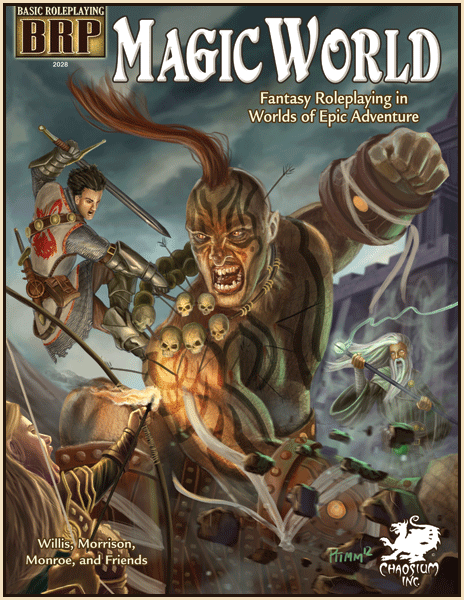
We recently played quite a few sessions of Magic World, Chaosium's update/compilation of its BRP fantasy rules (Elric!, with a bit of RQIII squeezed in there too). We enjoyed playing it, using it to run a brief sandbox game based around Salamonis in the Fighting Fantasy world of Titan. I have a few thoughts on the system:


1.    I like the combat system. This is no surprise, as it is basically the Elric! system, which is very smooth and quick to run, while at the same time retaining plenty of texture, mostly by way of a large number of 'spot rules' that handle things such as disarming or knockout blows, variable weapon length etc. Variable armour adds another dice roll when compared to most games, but it is a simple one that adds to the drama of combat, and using total hit points rather than hit locations allows for easy bookkeeping. The major wound system can provide plenty of specific and 'colourful' injuries, all the same.

2.    There are too many skills. This is particularly noticeable in the case of the 'physical' and 'perception' skills, groups of skills that, to my mind are so interrelated that skill in one should almost always accompany skill in (some of) the others. In terms of 'perception', Magic World has Insight, Listen, Sense, Search, and Track, plus other 'information' skills such as World Lore, Evaluate, etc. It is a weakness of my Refereeing style that I have a hard enough time running a game with a single 'perception' skill. If these kind of skills are going to mean anything in the game, the Referee must 'gate' important information not by player decisions but by character skill. If a PC has Sense at 90% (as was the case in our game), the Player must get the sense (ugh) that such a skill is as mechanically meaningful as having Sword at 90%. Whether a PC has Sword at 90% or 60% or 30% determines her chances of defeating the Baron's Champion. If we are going to have perception skills, the percentile rating should determine the chances of the Player being given information that will allow them to make better decisions. Oh, I know I am hashing out old territory here…

But it is not just the types of skills, but the granularity. The fact that competency in these closely related skills is not related, which leads me to…

3.    I like the way combat skills are handled (but…). In Magic World there are weapon groups, which encompass all weapons of a particular type. Skill with one weapon in a group = skill in all other weapons in that group. This skill is used for both attacks and parries. This is a nice middle ground between the extreme granularity of Chaosium RQ with skills for each individual weapon and separate parry skills, and the broad strokes 'styles' of  MRQII and RQ6 and the 'close combat / ranged combat / unarmed combat' split of OpenQuest. But then, if I’m going to enjoy this level of granularity for combat, for the sake of consistency shouldn't I accept a similar level of differentiation for 'perception skills', or for the eight (yes, 8!) physical skills? Perhaps, I should, and here you can see how my preferences waver between the granularity of Magic World and the condensed skill list of OQ.

4.    I don't like the fact that the equipment list is all out of whack. Who would. That's not a taste thing. The Bronze economy appears to make little sense. The weapon groups on the table are all over the place, but this is easily fixed by reference to the table describing what ought to be in each group. But this does cause one to lose confidence that the other numbers on the table reflect the intent of the designers. Should the STR/DEX requirements be that high? Should this weapon really do more damage than that one? Should a falchion really be that expensive? I own Elric!, and so could do a comparison, but actually, when I run Magic World again, and I shall, I will most likely dump the entire equipment section and replace it with a bespoke list, likely derived from Arms of Legend.

5.    Character creation is great! Quick and simple, but without losing the distinctive customizability of a BRP game. Players don’t simply have a pool of points to distribute as they see fit, which leads analysis paralysis as they pinch a percentage point here and there, tinkering with details that drag out character creation for little gain. Rather, they have blocks of points based on their culture and prior occupation, rather like Peter Maranci's Skill Pyramid. Players simply have to decide which of the listed occupational skills they want to be best at, which they want to be good at, and with which skills they want some competency. The, as default, limited magic helps speed up character creation, too. Which leads me to…

6.    Magic. By default, only characters with a POW of 16 or more can use magic. If Players are randomly rolling their characteristics, this means that magic using characters will be pretty rare, unless they make a grim bargain and begin trading away their other characteristics in the pursuit of magical power. I'm pretty happy with that – it matches the tone that my fantasy worlds, regardless of starting point, eventually take. And with magic as a power limited to just a handful of people it means that the assumptions of the game are roughly compatible with the assumptions behind most (D&Dish/’vanilla’) fantasy worlds.

There is only one type of magic in Magic World (barring Advanced Sorcery, or plugging in the Unknown East for Elric!, or the BRP Magic Book, or stuff from the BGB, or, or, or...). But, actually, that’s not quite true. There is only one mechanic for handling magic in Magic World. But that doesn’t stop a Referee creating a specialist spell lists for different types of magicians and magic users, changing the flavour text and so on. And it is certainly easier to do this than to grokk and incorporate the mechanically distinct magic systems in RQ6. 

This is not a review. But here’s something like the conclusion to a review: In a nutshell, the disappointments that I have with Magic World are largely a back-handed compliment; while I wanted a clean, revamped Elric!, Magic World appears a bit undercooked, perhaps because Chaosium haven’t backed the game with any great gusto. Which probably makes business sense – who wants to put too much of their resources into a competition with Legend (the $1 OGL D100 game!), RQ6 (a game of supreme polish), and OQ2 (the quickest and easiest system for running D100 fantasy, and it is OGL too!)? I don’t expect Chaosium to invest great resources into fighting a losing battle because it’ll please my idiosyncratic desires for a relatively low magic D100 game of medium crunch that uses the resistance table! But I’m glad that they let Ben Monroe resurrect the Elric! system, and hope that Magic World releases are part of the BRP catalogue for some time to come.

But update the .pdf with the errata, already!  

Friday, 11 April 2014

Friday, 28 March 2014

A very old school critical hit chart...


In real life, I've recently been reading a little about medical illustration. And I came across this brilliant image:


Now then. What I'm thinking is that something like this would make an excellent die-drop table, of the kind seen in Zak S' excellent Vornheim. Suitable for all manner of OSR games, but probably particularly suited to Lamentations of the Flame Princess. I'm imagining that, as with the supplemental critical hit tables for WFRP1e, there would be a different die-drop table for a different sources of injury, all graphically realised in gory faux-woodcut detail. In order to 'bulk' the supplement out to 16 pages (or whatever), there could be a few pages of similarly illustrated diseases, poisons, and 'advice' on healing. It would masquerade as a 'real' manual, complete with a pun-tastic 'German' name in the classic WFRP style.

Here's the front cover to von Gersdorff's manual. Now that has some serious Old School vibe!

But I can't draw, so someone else has to do it! And anyone who can draw probably wouldn't need me to supply the words. Especially the person that immediately sprang to mind when this idea popped into my head.

Thursday, 27 March 2014

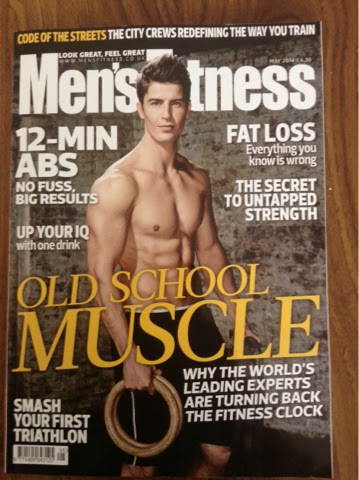
Old School Muscle


Percentile, or not?

When this dropped through the letter box, I thought someone had bought me a subscription to Rafael Chandler's Grognard Magazine.

I see there is also an article about Potions of Intelligence.

Wednesday, 26 March 2014

The Goblin Tax (part two)


So, here are entries 7-12 on the 1d12 selection of GOBLIN encounters. These are not meant to be whole adventures, but some of these encounters might become significant events in a sandbox campaign. Or they might be just a little bit of colour to liven up the evening's goblin slaughtering session.

Oh, and I was wrong - these print on two sides of a 6"x4" index card when printed in Calibri at 11 point. If anyone actually wants the them in a printable format I'll see what I can do about putting a .pdf file up somewhere.


7 DOMINATED DRONES
EIGHT near naked GOBLINS labour tirelessly, moving at a single, inexorable pace. They are lean and fit, working in total silence. They have lifeless eyes and blank expressions – a result of the dull grey metal headbands that they wear: BANDS OF DOMINATION (7a). The reaction check is not for these goblins, but their master – CHARNUM the MAGIC USER – who hides, wasting away, in the cellar of a cottage a mile away.  

GOBLINS (4) = AC: 7, HD: 1-1, HP: 3, MV: 30’ per round, ATT: 1 tool DAM: 1d4 SV: NM, MR: 12, AL: C, XP: 5

CHARNUM (MU 2) = AC: 9, HD: 2d4*, HP: 4, MV: 10’ per round, ATT: 1 dagger (-2 to hit), DAM: 1d4-2, SV: MU2, MR: 7, AL: C, XP: 25

Charnum has Magic Missile and Charm Person (or Sleep) memorised. Charnum will use the Crown to enslave the party if he uses Sleep. This might not be interesting. They will be slaves of Charnum for the final 3d4 days of his life.

Charnum recently stole the Crown and Bands from his tutor and used Charm Person (or Sleep) to assemble his ‘retinue’, planning to become a mighty wizard. If the reaction roll is favourable, Charnum will attempt to use the goblins to guide the party to his cottage. He is educated and polite, but will plead to be returned to civilization. But not to his tutor. If the reaction roll is hostile, Charnum will reason that the party are bounty hunters, come to reclaim the crown and deliver him to justice. He will use the goblins to keep the party away from the cottage at all costs.

Charnum has 20GP in a box decorated with his family crest, and a spellbook containing Read Magic, Detect Magic, and the above spells. These items can be used to trace Charnum’s origin and the previous owner of the Crown.

7a THE CROWN AND BANDS OF DOMINATION
Each Crown of Domination is magically connected to 1d8 Bands. Both are made of a permanently warm, dull grey metal. The Bands are thin circlets, while the Crowns are heavy and broad.

The will of those wearing the Crown (‘masters’) immediately displaces that of those wearing the Bands (‘slaves’). Slaves lose one point from INT, WIS, or CHA per day. For each point lost so, masters lose a point from STR, DEX or CON. If INT, WIS, or CHA fall to 0, the slave is permanently without will. No more ability score points are lost by either master or slave. If STR, DEX, or CON reaches 0, the master dies. The Crown cannot be removed except by use of Dispel Magic, which cannot be cast by the wearer. The Bands can be removed by magic or one the death of the ‘master’. A Saving Throw vs. Spells in can be made to avoid the domination of both the Crown and the Bands. Ability points recover slowly, but only after the items are removed.


8 RAG AND BONE
A small cart rumbles along, piled high with bones and animal pelts. The cart is drawn by FOUR WOLVES. THREE GOBLINS (Gatta, Krun, Lod) ride and walk alongside. They are traders, travelling between petty goblin kingdoms. 

GOBLINS (3) = AC: 6, HD: 1-1, HP: 3, MV: 30’ per round, ATT: 1 short swords DAM: 1d6 SV: NM, MR: 7, AL: C, XP: 5

WOLVES (4) = AC: 7, HD: 2+2, HP: 10, MV: 60’ per round, ATT: 1 bite DAM: 1d6 SV: F1, MR: 8(6), AL: N, XP: 25

The goblins are minded to react positively (a +2 modifier to the reaction check). They are traders after all. If the party receives a favourable reaction, the traders will attempt to bargain with the party. They are especially interested in metal weapons and armour. Abstracted, the party can trade for pelts that will sell in a human settlement for double the value of the objects traded, but at double the encumbrance. Many of the bones are marked with intricate carvings; transcriptions of ‘epic’ poems, jokes, and other aspects of goblin culture – including erotica. These will also sell for double the value of the objects traded, at a one-to-one encumbrance rate, but only to a tiny market of secretive scholars and collectors. If the party receives a hostile reaction, the goblins will see the party as the sort of people who kill goblins and take their treasure. Their wolves make them dangerous opponents. The goblins will take the wolves by the reins and use them to menace the party. If the party do not retreat – or above the growls and shouts offer generous trade terms – the goblins will let slip the wolves.

Goods in the cart; 300gp of pelts, 200gp of carvings and a goblin gambling set worth 10GP (these artefacts of goblin culture will flood the tiny market). Strapped underneath the cart is a small box containing 50GP of silver jewellery. If the party have killed or driven off the wolves, how will they get the goods to market? 


9 ON TO ADVENTURE!
A ‘first level’ adventuring party of FIVE GOBLINS are exploring the same area as the party. The party consists of two ‘Fighters’ (Jagga, Prok), one Shaman (Wratta), one Wicca (Shonk the Magnificent), and one ‘Thief’ (Dirty Agg), together with a decrepit old mule laden with rope, torches, etc.

GOBLINS (‘Fighters’ and ‘Thief’) = AC: 6, HD: 1-1, HP: 5, MV: 30’ per round, ATT: 1 spear DAM: 1d6 SV: NM, MR: 8, AL: C, XP: 5

WRATTA (SHAMAN 1): AC: 6, HD1, HP: 5, MV: 30‘per round, ATT: 1 silver sickle, DAM: 1d4, SV: C1, MR: 8, AL: C. XP: 10

SHONK (WICCA 1): AC: 6, HD1*, HP: 5, MV: 30‘per round, ATT: 1 bone dagger, DAM: 1d4-1, SV: MU1, MR: 8, AL: C. XP: 13

Wratta has no spells, but can command the spirits (Turn Undead as a 1st level Cleric). Shonk knows Light, which he uses to impress (and blind) other goblins. 

The standard behaviour of the PCs should be reflected back at the players. These goblins are adventurers, and the PCs have established what that means. Nevertheless: if the party receives a favourable reaction, the goblins will offer to trade information with the party. They will know details about 1d3 nearby adventure locales. The goblins may be persuaded to temporarily ally with the party if a profitable adventure is proposed. Goblins are unpredictable, and additional reaction rolls should be made mid-adventure. If the party receives a hostile reaction, the goblins will react much as the PCs would to a dangerous monster.

The goblins have 25GP between them, along with poor quality adventuring gear. This gear has a 10% chance of failure in critical situations. They also have a map to an adventure locale with scribbled details (roll twice on the rumour table).


10 WRETCHED ESCAPEES
A group of FOUR GOBLINS (Ak, Jud, Brong, Degga) have escaped from a sorcerer. They are a pathetic sight; snivelling, terrified, near naked. They are being harried by THREE of the sorcerer’s SCOUTS (Bran, Krevan, Hart), humans with tattooed faces trained in bushcraft (PCs are surprised on a roll of 1-3 when in the terrain of the type inhabited by the scouts’ tribe, i.e. the terrain in which the initial encounter takes place). These will not be encountered together – once the party has encountered the goblins the next wandering monster rolled will be the scouts.

GOBLINS (4) = AC: 6, HD: 1-1, HP: 2, MV: 30’ per round, ATT: 1 rock, DAM: 1d3, SV: NM, MR: 5, AL: C, XP: 5

SCOUTS (3) = AC: 6, HD: 1, HP: 5, MV: 30’ per round, ATT: 1 short sword or sling, DAM: 1d6 or 1d4, SV: T1, MR: 8, AL: C, XP: 10

There are two reaction rolls here. A favourable reaction from the goblins will see them offer magical treasure (2d3 Potions of Healing in the form of pellets of sweet, thick paste wrapped in leaves) if the party escort the goblins to their tribe (a 2d3 day journey). A hostile reaction from the goblins will see them flee the party, who they presume to be agents of the sorcerer. If the goblins do escape, this will complicate further encounters with goblins in the area as news of the party’s affiliation spreads.

A favourable reaction from the scouts will see the party approached as possible collaborators in the schemes of the sorcerer – initially the capture of the goblins, for which the sorcerer’s agent will reward them with 2d3 Potions of Healing). A hostile reaction will result in the scouts seeing the party – particularly any magic using characters, as better prizes than a band of wretched goblins. The scouts wear silver medallions bearing the symbol of the sorcerer – worth 20GP when melted down – and 5GP a piece.


11 LOTTAGROB THE KNIGHT
A GOBLIN (Lottagrob) in shining plate armour sits astride a well groomed DIRE WOLF (Lope), a brightly coloured pennant flying from his spear. A second, smaller GOBLIN (Kip) serves as squire to this ‘knight’, holding a spear shield and two spare spears. Lottagrob was captured by human knights, and before escaping developed a fascination with chivalry.

LOTTAGROB = AC: 3, HD: 2, HP: 10, MV: 30’ per round, ATT: 1 spear or short sword, DAM: 1d6, SV: NM, MR: 8, AL: L, XP: 20

LOPE = AC: 6, HD: 4+1, HP: 18, MV: 50’ per round, ATT: 1 bite DAM: 2d4 SV: F2, MR: 8, AL: N, XP: 125

KIP = AC: 6, HD: 1-1, HP: 2, MV: 30’ per round, ATT: 1 spear, DAM: 1d6, SV: NM, MR: 7, AL: L, XP: 5

Lottagrob will block the party’s path. He will challenge the party member who most resembles a knight to a contest at arms. If the reaction roll is favourable, Lottagrob will challenge his opponent to a non-lethal dual- subdual damage only. If he wins, he will take the loser’s weapon to melt into ‘warrior rings’. He will also claim the loser’s shield, or other item carrying an emblem to keep as a trophy. Throughout, Lottagrob will be polite, and after the contest will offer the party the hospitality of his motley patchwork of a tent. If the reaction roll is negative, Lottagrob will list the crimes of the party (some real, some imagined, some cases of mistaken identity). He will then demand that the party’s champion face trial by combat. If defeated, and his life spared, he will see it as proof that the party is just, and will offer to serve the party until he has paid his debt (one adventure).

He is wearing a finely crafted suit of Halfling-sized armour. Of Elven manufacture, it is worth triple the price of plate, but encumbers only as much as chain. Lottagrob has no money, being of charitable nature.


12 HELP ME, OH BIG ONE, YOU’RE MY ONLY HOPE!
The party hears a whimpering from the underbrush. The whimpering is silenced. If they listen carefully, they will hear a gruff ‘hush’. THREE GOBLINS are hiding; a female (Nush), a youngling (Vankagh), and an old warrior (Vrang). Vankagh is the spawn the dead king of a local tribe. The new king killed Vankagh’s siblings, but his mother fled with the help of the old king’s champion. They hope that a rival tribe will see fostering a pretender to the ‘throne’ as a source of long term advantage.

NUSH = AC: 6, HD: 1-1, HP: 2, MV: 30’ per round, ATT: 1 knife, DAM: 1d3, SV: NM, MR: 7, AL: C, XP: 5

VRANG = AC: 6, HD: 2, HP: 10, MV: 30’ per round, ATT: 1 sword +1, DAM: 1d8+1, SV: NM, MR: 8, AL: C, XP: 25

GOBLINS (2d4) = AC: 6, HD: 1-1, HP: 4, MV: 30’ per round, ATT: 1 spear, DAM: 1d6, SV: NM, MR: 7, AL: C, XP: 5

With a favourable reaction, Vrang has assumed the party to be of a mercenary bent. He will promise them riches if they can be delivered to the rival tribe. They will be pursued by 2d4 goblins (the next wandering monster encounter). There is a -4 penalty to any reaction roll with the pursuers if the party is with Vankagh. With a hostile reaction, Vrang attempt to frighten the party with COWARD MAKER. The screams of his sword will trigger a wandering monster roll. Regardless of morale rolls, Nush and Vrang will not flee without Vankagh.

Coward Maker is a Sword +1. It is a crude falchion that screams as it is swung. This is part of the regalia of kingship of the tribe, and the new king is as concerned with its return as he is with killing the youngling. Hidden in Vankagh’s swaddling is 100GP of jewellery.